Monday, July 15, 2013

40 Year Itch: Faithful Till Death


In the early morning hours of July 15, 1973 a drunk driver hit Clarence White as he was loading equipment into his van following a gig in Palmdale, California. He died the next day at the age of 29.

Though best known for his stint with The Byrds ( beginning as a session musician on Younger Than Yesterday and then as a full fledged member from 1968 -1973), White also played with country rock pioneers Nashville West, the bluegrass super group Muleskinner, Gram Parsons and with his brothers in The Kentucky Colonels.

As a bluegrass artist, he was  a fast, accurate and incredibly innovative guitarist.


  With an electric guitar he practically invented country rock. He and Gene Parsons came up with a device called the B Bender which can make an electric guitar sound like pedal steel when the neck is pulled back. You can hear a B Bender on a lot of Linda Ronstadt and Eagles tunes ( especially "Peaceful, Easy Feeling").


  The legend of Clarence White is approaching the same mythical status as Gram Parsons ( who sang "Farther Along" at White's funeral). If you want to learn more and hear more from White check out the ten part series by Adios Lounge.


Sunday, July 14, 2013

Blown Away !


40 Year Itch: Slow Jamming With Stevie Wonder


On July 13 1973, weeks before the release of Innervisions,  Stevie Wonder finished his show at New York City's Rainbow room with an impromptu  six and a half minute thank you to his audience.


Wonder had given the New York crowd a preview of four songs that would appear on next month's release Innervisions.

1. Don't You Worry 'Bout a Thing
2. Higher Ground
3. Superwoman
4. To Know You is To Love You\
5. Signed Sealed Delivered I'm Yours
6. Visions
7. Living for the City
8. You Are the Sunshine of My Life
9. Superstition
10. My Dreams


Saturday, July 13, 2013

40 Year Itch : If I Crossed A Million Rivers


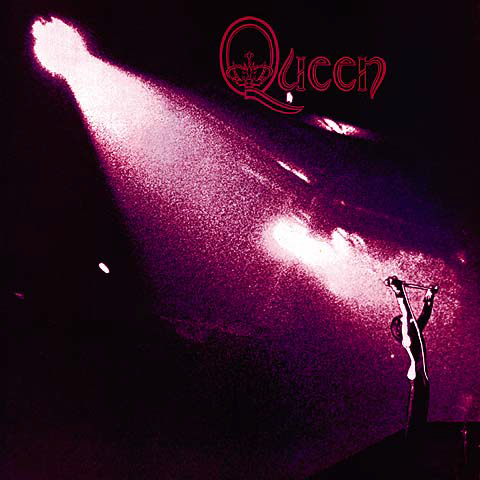
Thundering right out of the gates with its lead off track "Keep Yourself Alive", Queen released its debut album on July 13th 1973 and immediately drew comparisons to Led Zeppelin.

"With its first album Queen has produced a driving, high energy set which in time may be looked upon with the same reverence Led Zep I now receives" said the Chicago Tribune

Rolling Stone's Gordon Fletcher added "There's no doubt that this funky, energetic English quartet has all the tools they'll need to lay claim to the Zep's abdicated heavy-metal throne, and beyond that to become a truly influential force in the rock world. Their debut album is superb.".


It took them long enough. 

     Queen played very few gigs. Its members were all college students. Guitarist Brian May was working on his Ph.D. in astronomy. It took Queen almost all of 1971 just to record five demos at the state of the art De Lane Lea studios in Wembley. Checking out the studio, producers Roy Thomas Baker and John Anthony heard the demos and signed the band to their management company Tribute. What did Queen get out of the deal? An opportunity to record their album only when the studio wasn't booked. 

Usually between 3 am and 7 am.


Pulling all nighters, Queen recorded all the songs by November of 1972 but had to wait another 9 months for the album to be released by EMI and Elektra. 
Thus the poignant point in the liner notes:
"Representing at least something of what Queen's music has been over the last three years."


Despite good reviews, Queen's debut did not sell. It wasn't glam enough for the now waning glam rock scene nor hard enough for the hard rock crowd. There are multi-tracking moments that will remind listeners of what Queen would become but not enough.

A strange footnote: 

While recording the album Freddie Mercury  and the boys agreed to record a cover of the Beach Boys' hit "I Can Hear Music" as  Larry Lurex.


What would push Queen to the next level? Certainly not publicity photos like the one below.


 In August of 1973 they were back in the studio working on Queen II.

Friday, July 12, 2013

40 Year Itch : Adventures in Soul


Two Great Artists Challenge Themselves and Their Fans

With his dazzling live album in 1972 and his partnership with Roberta Flack on the Grammy winning "Where Is the Love", the multi-talented Donny Hathaway had finally struck Gold. Now, to show his new fans what he was really capable of, Hathaway recorded his most ambitious set yet.

I decided to call it Extension of a Man because I am in the process of expanding and developing styles. I would like to record as many styles as humanly possible for one person.
-Donny Hathaway

The album's best known cut is the beautiful easy listening anthem "Someday We'll All Be Free" ( used in Spike Lee's Malcolm X). When Hathaway first heard the finished take of the tune he broke down in tears. The lyrics, by friend Edward Howard, were written not as an anthem but as a message to Hathaway:

 "What was going through my mind at the time was Donny, because Donny was a very troubled person. I hoped that at some point he would be released from all that he was going through. There was nothing I could do but write something that might be encouraging for him."


But there's also the symphonic opener "I Love the Lord; He Heard My Cry ( Parts I & II)" , a Tijuana Brass inspired "Flying Easy", a funky revisiting of  "The Ghetto" called "The Slums" and a Latin instrumental called "Valdez in the Country". Added up, it's a masterpiece from one of soul music's great visionaries. 

This would be Hathaway's final album. The man Curtis Mayfield described as "instilled with the depth of religious feeling in black music" was also suffering from paranoid schizophrenia. The year after his 1978 comeback duet with Flack, "The Closer I Get To You", Hathaway apparently leaped to his death from the 15th floor of New York City's Essex House.


I think we've found a winner for worst album cover of 1973.

Perhaps taking a cue from the progressive rock experimentalists , Aretha Franklin followed up her double live album of gospel music, Amazing Grace, with what initially was going to be a jazz vocal album, Hey Now Hey (The Other Side of the Sky). There's a straightforward take on Stephen Sondheim's "Somewhere" and a swinging rendition of James Moody's "Moody's Mood". Had producer Quincy Jones, record execs and Aretha herself not gotten cold feet, this might have a great, if underselling gamble. 


Instead they padded the album with filler and a song written by Aretha's sister Carolyn ( who sings background with Erma Franklin)  called "Angel" which hit #1 on the R and B charts and peaked at #20 on the pop charts. It was the first album Aretha recorded for Atlantic not to crack the Top 25 pop chart.

Quincy Jones also produced an astonishing Grammy winning single for Aretha in 1973 called "Master of Eyes ( The Deepness of Your Eyes)" which made it up to #33 on the pop charts but for some reason did not appear on Hey Now Hey.

Thursday, July 11, 2013

40 Year Itch: Don and Phil Call It Quits


By July of 1973, Don and his younger brother Phil Everly were barely talking. They would stay at different hotels, take separate cars to the gigs and even use separate dressing rooms. They'd fight like cats and dogs until the curtains were pulled apart and the show started. They were making good money as the Everly Brothers and, like Siamese Brothers,  seemed to be stuck with each other for life.

Then on July 13, 1973 at Knott's Berry Farm in Buena Park, California,  Don walked on stage after knocking back a few margaritas. He slurred the words. He sang the wrong words. He sang flat. At the end of the show, as Don took his bow, Phil smashed his guitar, walked off the stage and announced "I'll never get on a stage with that man again."

They only met once over the next decade : to bury their father.

Wednesday, July 10, 2013

40 Year Itch: This and That...


Bits of Music news from the early Summer of 1973:

Richie Havens begins an 8 city tour to promote Portfolio, an album containing eight lithographs Havens himself drew.


Why is John Dean's picture in a music blog? Because the Time Magazine cover story was promised to Paul Simon.


  Buck Owens was spotted in San Diego for farewell ceremonies to two US Navy Destroyers sold to Brazil:
 The USS Buck and the USS Owens.


Gemini announced that their Watergate poster was outselling posters of Donny Osmond, David Cassidy and The Jackson 5.
                                 

Billy Paul bough his wife a Mercedes with the money he earned from "Me and Mrs Jones."